The gauge
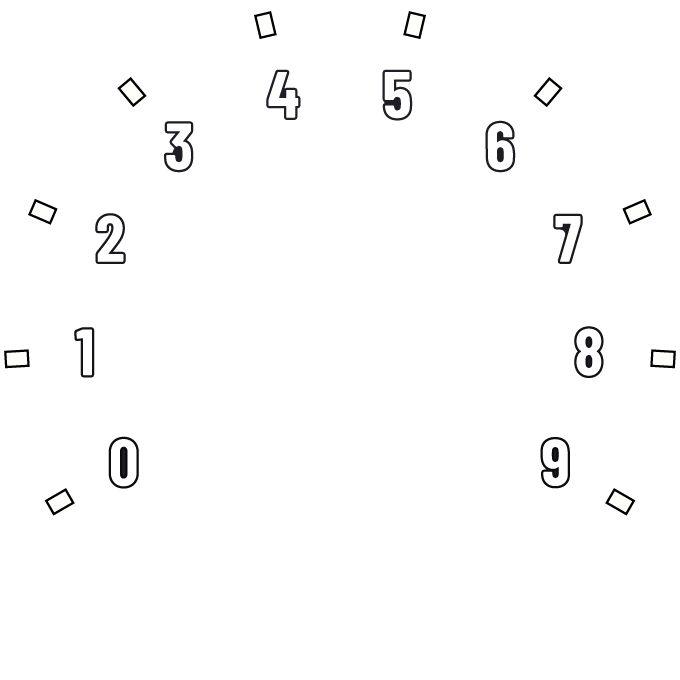
A big, clear rev counter with your speed in the middle. Set your own warning and redline, and a shift needle warns you before a downshift would over-rev the engine.
Left, center and right. Fill them how you like, let the map stretch across two or all three, and give every drive mode its own arrangement.


 0MPH
0MPHA big, clear rev counter with your speed in the middle. Set your own warning and redline, and a shift needle warns you before a downshift would over-rev the engine.
Eleven you can put in a zone, plus one that only exists in development builds. The last one is compiled out of the software you get.
The rev counter, with your speed and gear in the middle. Your own warning and redline, and a shift needle that warns before a downshift would over-rev it.
Oil and coolant temperature, oil pressure, boost and battery. Numbers, bars or dials, and it moves to two columns when you ask for four or more values.
Instant and average consumption, range, trip distance, fuel used and elapsed time. Full or simplified.
Cornering and braking forces live, with a trace of the biggest you have pulled, plus steering, throttle and brake.
Lap and session clocks, best and last, full history, and a browser for every session you have recorded.
Doors, hood, trunk and wipers move as they move. The wheels steer with you, tire pressures sit on each corner, blind spot lights up beside the car, and the rears smoke when they let go.
North-up or heading-up, posted speed limits, offline coverage, and one, two or three zones wide.
Everything currently wrong, in one list, with a page per alert showing the measured value against its limit.
A camera wired directly to the cockpit, filling its zone or the whole display.
Cameras on the cockpit’s own network. It finds them itself, gives each one a fixed address, and shows one large or every one at once in a grid.
The whole configuration tree, in plain language, laid out so you can find things.
Development builds only: frame rate, load, temperature, memory and storage. Compiled out of the builds you get.
A cluster that is already running Wi-Fi, already handing out addresses and already drawing at sixty frames a second is most of a camera system already. So it is one.
Turn the hotspot on and put a camera on it. The cockpit calls out across its own network, finds what is listening, and lists it by name. Add it, and from then on it has a fixed address that does not move between drives, because a camera that comes up somewhere new every morning is a camera you stop trusting.
Point one at the hitch, one down the blind side, one at the trailer, one out the back on track. Give a feed a zone and it fills it. Give it the center and it takes the display. Run several and they come up together in a grid.
12MPHFour feeds at once, with the one you are watching outlined in your accent color.
Turn the hotspot on, put a camera on it, and ask the cockpit to look. It calls out across its own network, collects what answers, and lists every camera it found by name. Nothing to type, no address to work out.
A camera that moves address every time you start the car is a camera that stops working. Each one is pinned to a fixed address on the cockpit’s network the moment you add it, so the picture is there on the first try, every time.
Give a camera a zone and it fills it. Give it the center and it takes the display. Run more than one and a grid puts every feed up at once, so you can pick the one you actually need without going hunting.
A camera plugged straight into the cockpit is its own screen, with no network involved at all.
The cockpit runs the network the cameras live on. It hands out the addresses, it holds the password, and nothing about the feed leaves the car.
A hitch, a blind quarter, the trailer, the pit lane behind you. It is a camera screen, not a reversing camera, so it is on when you want it rather than only in reverse.
Navigation that only works with signal is navigation that quits at the moment it was worth having. So the roads are downloaded onto the board before you go: pick ten, twenty-five or fifty miles around wherever you are standing and let it run. Lose Wi-Fi halfway through and the unfinished areas are remembered and resumed rather than started again.
The posted speed limit comes from the same place. Not a subscription and not a phone: it is read out of the map data already on the board, which is why it keeps working with no bars at all. And it lives in the top bar rather than on the map, so it is in front of you on the gauge, on the temperatures, on the lap timer.
Offline coverage is downloaded as a radius around wherever you are standing. Pick the distance, let it run, and the roads inside it are yours whether or not there is signal.
Lose Wi-Fi halfway through and the download is not lost. The unfinished areas are remembered and resumed from where they stopped.
Not from a subscription and not from a phone. The posted limit is read out of the map data already on the board, which is why it still works in the canyon with no bars at all.
It lives in the top bar, so the limit is there on the gauge, on the temperatures, on the lap timer. You do not have to be looking at the map to see it.
Your choice, and the map takes one zone, two, or the entire display when you actually need to see where you are going.
Set each drive mode up the way you want it once. Whichever modes your car came with, the screens you want are already there when you switch. You never touch a menu on the move.
42MPHTemperatures on the left, trip and economy on the right.
Reserve a place in the first batch. No payment today. We’ll confirm fitment for your model year before anything is charged.